
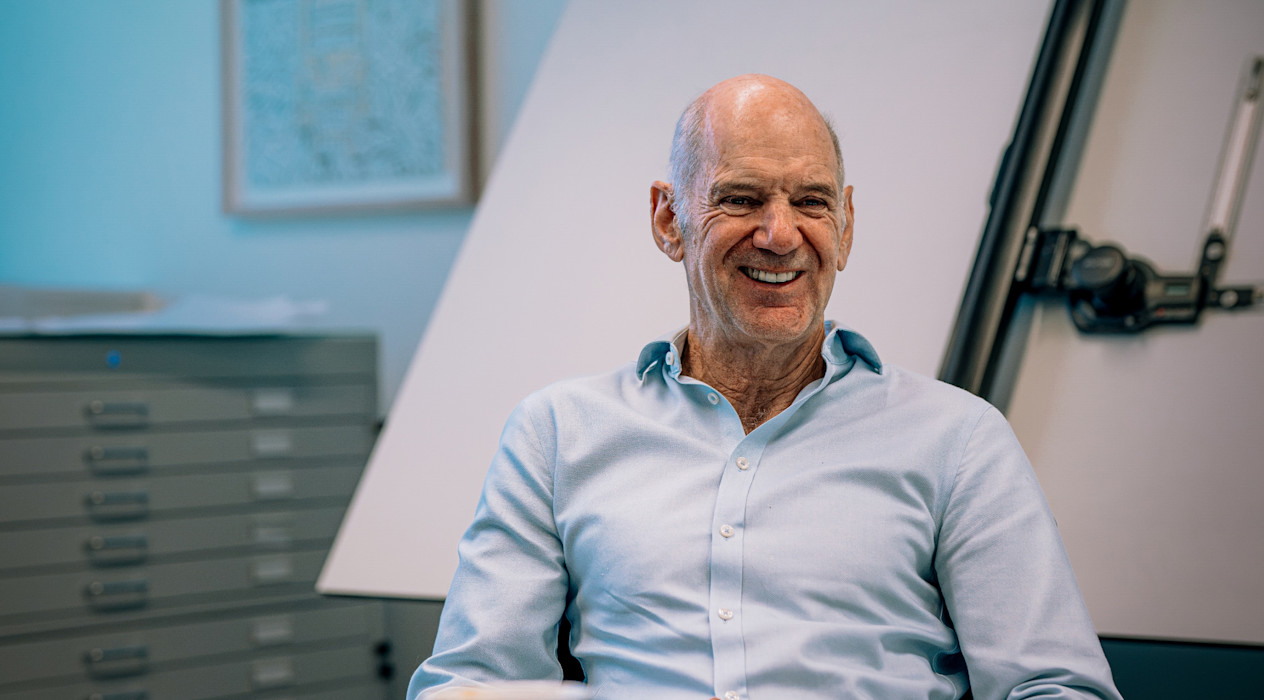
Outside, Formula One has entered a new era. Inside Aston Martin Aramco, Adrian Newey is confronting the realities of building a winning team. The season hasn't unfolded as anyone expected, and in the latest UNDERCUT, he opens the door to an honest conversation about hard truths, difficult decisions and the challenge of turning the team's fortunes around.
"Step into my office."
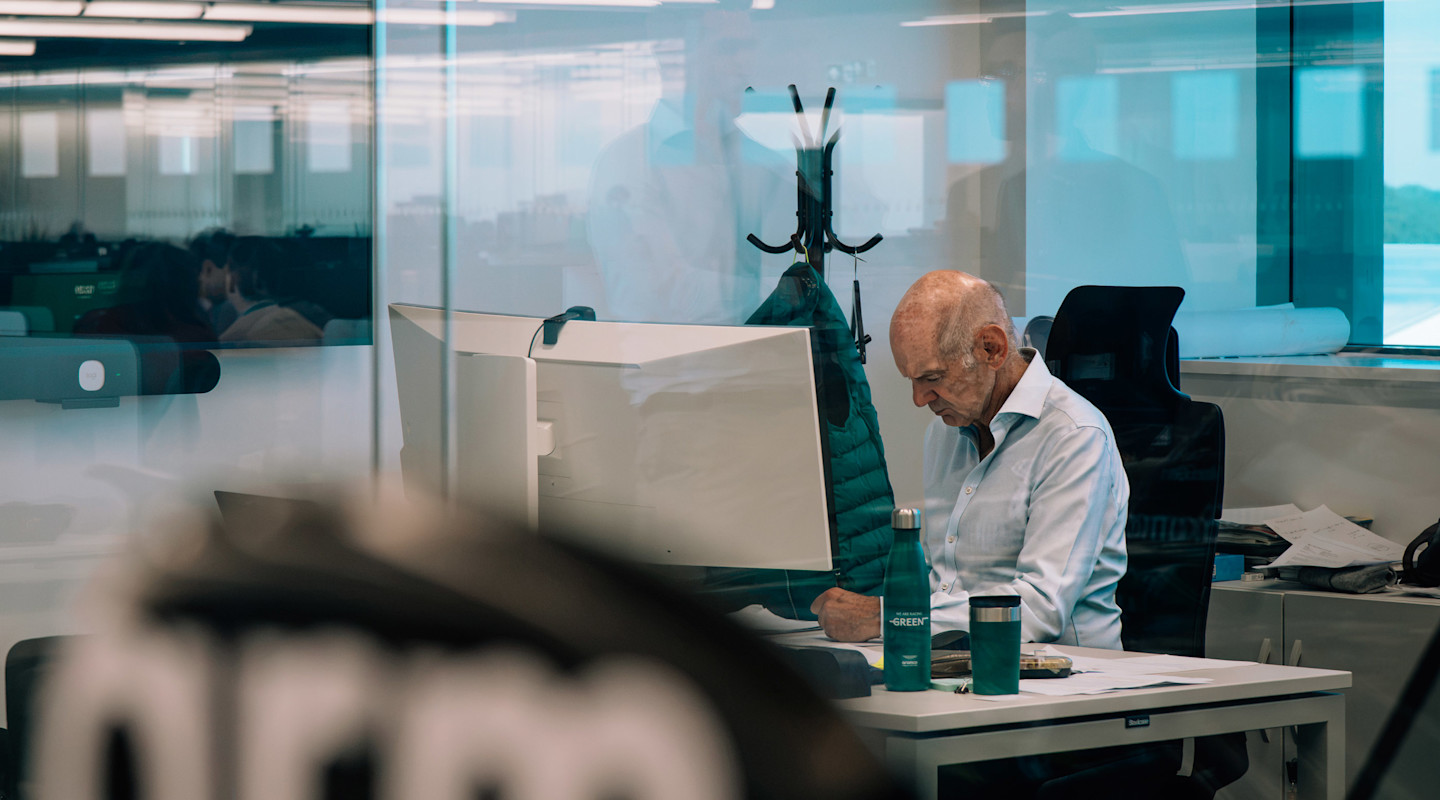
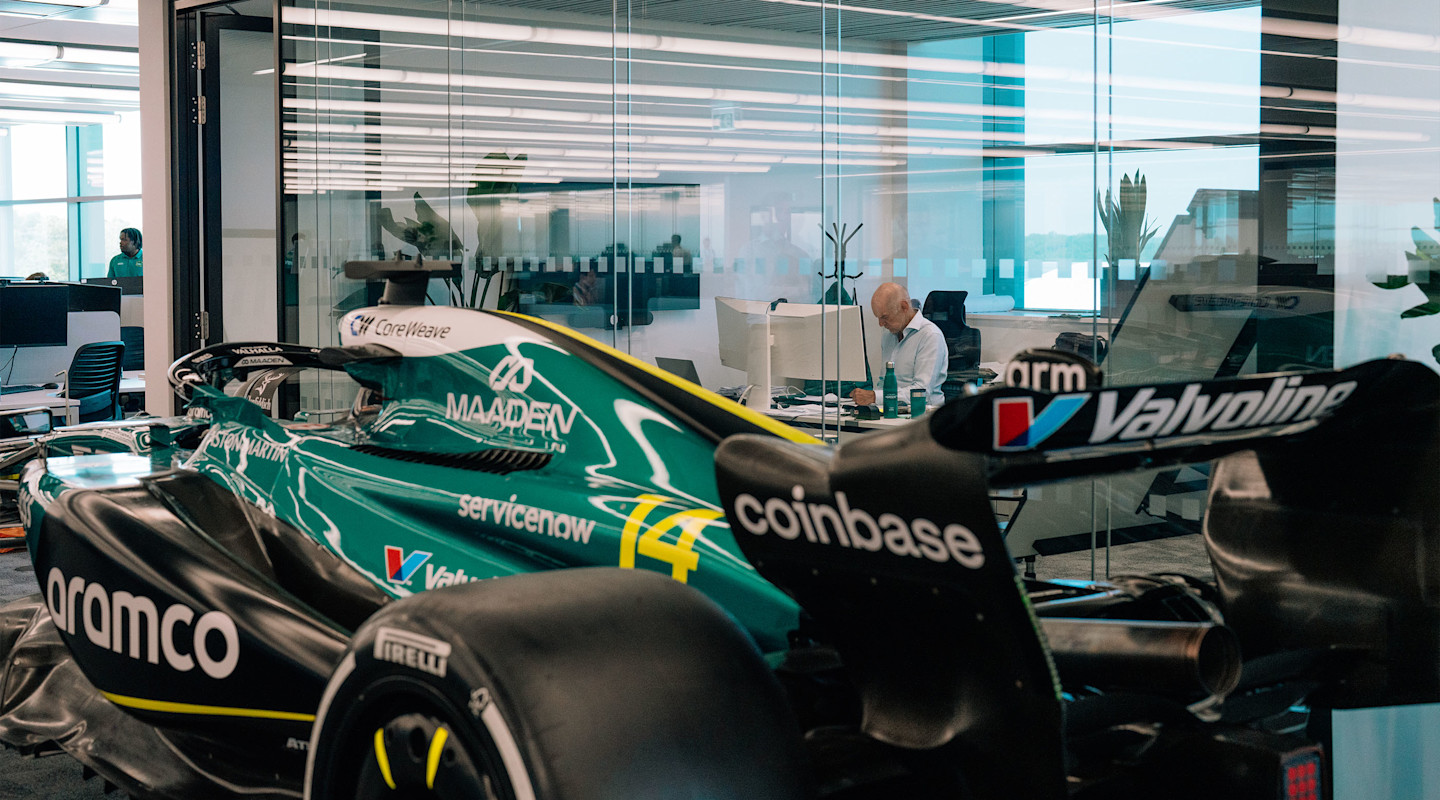
Tucked away in the heart of the Design Office, Adrian Newey's workspace sits at the centre of an endless flow of ideas, engineering debates and relentless problem-solving. Beyond the glass, engineers move between meetings, concepts evolve by the minute and the future of Aston Martin Aramco is being shaped one decision at a time.
Adrian has been conspicuous by his absence in recent months. A brief spell of illness played its part, but for the most part he's been exactly where you'd expect: behind closed doors, focused on chasing performance, leading development and helping steer the team through a season that has proved far tougher than anyone anticipated.
A few months ago, optimism came easily. Expectations were high.
Then came reality.
Late development, an overweight car and a difficult start to the season have forced the team into some uncomfortable conversations. Adrian isn't interested in avoiding them.
Ahead of our home race, the British Grand Prix, he carved out 20 minutes for his third UNDERCUT interview. The conversation that followed was candid, thoughtful and refreshingly direct. From missed targets and difficult lessons to the journey that lies ahead, nothing is off the table.
A humbling start
When we last spoke for the UNDERCUT back in February, there was a real sense of optimism around the team. Fast forward a few months and it's been far more challenging, even humbling. From where you sit, how has the season been so far?
"Extremely challenging. On both the chassis side and the power unit side, we've been on the back foot from the start. In hindsight, we probably put too much expectation on ourselves – and of course, you must never forget the quality of the opposition you're up against across the grid.
"We didn't start serious work on the '26 car until mid-March 2025 and didn't get a model into the wind tunnel until mid‑April. That left us several months behind our rivals – and that's a huge gap to close."
Was it purely timing, or did you realise there were deeper issues?
"Timing was a huge part of it, but not the only part. We've got a very talented group of people, but as an organisation we weren't yet working together as well as you would like and operating as one cohesive unit. Expectations were sky‑high, but the reality of where we were didn't match that.
"On the chassis side, we're quite a long way overweight. Some of that comes from the PU integration issues with Honda, but we also didn't do as good a job as we should have on our side at saving weight. When you design in a rush, weight is the first thing that suffers because you don't have the time to thoroughly optimise everything.
"Aerodynamically, we also took a bold direction – which was largely pushed by me – without the luxury of exploring multiple concepts in depth because time was against us. I wouldn't say the direction we've taken is fundamentally wrong, but it has thrown up challenges we didn't anticipate."
You walk around the AMR Technology Campus at night and the lights are still on. There are a lot of late evenings, a lot of motivation, and a real determination to prove that we can do this.
When reality bit
When did it really hit you – the scale of the task?
"Melbourne was the wake‑up call. Because of various power unit challenges, our first proper running was actually Free Practice Three at the Australian Grand Prix. Before that, in Barcelona and at the two Bahrain tests, we spent too much time in the garage just trying to get the power unit to run correctly with the chassis and gearbox.
"You know the idiom, 'it never rains, but it pours', and this is one of those classic cases where it felt like everything that could go wrong, did go wrong."
How did the team react?
"Once we all got over the initial shock of where we were, the reaction was actually very positive, and this is what really sticks in my mind. The whole group pulled together around two clear priorities: first, to pull ourselves out of the hole with a major update before the August break; second, to build the foundations properly for the future.
"It's something every single one of us in the team should be proud of – the way we've all pulled together.
"You walk around the AMR Technology Campus at night and the lights are still on. There are a lot of late evenings, a lot of motivation, and a real determination to prove that we can do this. We have the facilities, we have the people, we have huge amounts of talent. The task is to make it all gel – and to an extent, take the pressure off ourselves so we can breathe and concentrate on medium‑ and long‑term projects, not just the next race.
"That means not only solving our immediate aero and mechanical issues, but also introducing better systems and processes that underpin how we design and build the car."
Fixing the foundations
You've mentioned systems and processes there. What, specifically, wasn't working?
"We were relying on tools and processes that had been patched and bodged for years – you could trace some of them right back to the very early days of the Jordan team that was based here in Silverstone, long before Aston Martin returned to the grid. At some point, a system that's just patch‑on‑patch stops being fit for purpose. That's where we had got to.
"The result was a very frustrating car build. Parts weren't being ordered at the right time – not because people weren't doing their jobs, but because the underlying system was failing them."
So this was a structural problem rather than a people problem?
"Very much so. We've taken this difficult spell as an opportunity to overhaul how we work.
"We're making big strides in our in‑house facilities and production capabilities. You won't see all the gains immediately, but they'll be visible on the updated car: many more components are now produced in‑house. The gearbox casing is manufactured here, the floor patterns and floors themselves are made here, and a lot of parts that were previously outsourced have come back in-house.
"That gives us better cost control, but more importantly, much greater flexibility and control over our own destiny.
"Bringing more work in‑house gives us better quality control, better responsiveness and a tighter feedback loop from research to design to manufacture."
This is a trying period that we, in truth, probably need to go through to come out stronger, with a decent step forward in the second half of this season and a much bigger one for next year.
Rather than introducing smaller updates race by race, you've aimed for one big upgrade. How tough has that been and why is it the right approach?
"It was a painful decision. While others have been adding performance, we've effectively been standing still in relative terms, so each weekend can feel more painful than the last.
"But we believe it's the right decision – the right investment for our future, if you like. Our partners – Aramco, Valvoline, Honda and others – understand that this is a necessary trying period that we, in truth, probably need to go through to come out stronger, with a decent step forward in the second half of this season and a much bigger one for next year."
"I was not 100 per cent"
Before we get into the upgrade, you've had some health issues that took you away – at least physically – from the day‑to‑day. How are you now?
"I'm OK now, but it's been a difficult period. As I said earlier, it never rains but it pours.
"In truth, I was not 100 per cent last year. I had to balance health and work much more carefully.
"The team handled it incredibly well. I kept a very good relationship with the engineers and I don't feel it caused too much of a blip. That's a testament to how adaptable and supportive everyone here is."
The upgrade
Let's get back to the car. The team has been working on a major upgrade. When are we going to see it?
"We plan to introduce our upgrade in Hungary on both cars."
Structurally, how big a change is this upgrade? Are we talking new car or heavy evolution?
"The main structural elements remain the same – the chassis and gearbox architecture don't fundamentally change – but we've taken weight out of both, which required re-homologating and crash testing the forward chassis.
"The front suspension is unchanged. The rear suspension is slightly revised. We've developed a new nose and substantially revised aerodynamic surfaces. So, while the core structure is similar, it's a big aerodynamic package coupled with significant weight reduction. The target is to get very close to the weight limit."
Fernando wants to see clear, tangible progress. If we can show that we're moving decisively in the right direction, he's absolutely committed to being behind the wheel.
When you run the numbers, how big a step does it look?
"We're predicting a large step, but I'm reluctant to put specific numbers out there. We'll have to see when the car gets on track.
"Historically, at this team, there hasn't been enough investment in engineering simulation tools – not just project management systems, but the core physics tools themselves. We're putting that investment in now, but you don't rewrite and validate those tools overnight. Correlating them properly with the real car takes time.
"At the moment, they're improving, but the real gains from that work will come later in the year."
Drivers and direction
Let's talk about drivers for a moment. Lance and Fernando are at the tip of the spear, dealing with the car's limitations on track and then fronting up to the media. How have they handled this period?
"Both drivers have shown frustration, and at times that has spilled into the media. But it's also understandable. They're competitive animals. They want to fight at the front.
"I've had a lot of conversations with both of them about where we are, where we're going."
You sense the 'where we're going' bit is particularly important for Fernando. Time isn't exactly on his side. How important is this upgrade for him?
"It's very important. Fernando is really looking forward to the upgrade and, if it performs we hope he'll be in the cockpit for another season.
"Given his experience, his feel for the car, his ability to guide development, he's a tremendous asset. But he wants to see clear, tangible progress. If we can show that we're moving decisively in the right direction, he's absolutely committed to being behind the wheel."
Redefining the team principal role
Working with drivers is a big part of being a Team Principal, but your role here is structured differently from many other teams. How do you define it?
"'Team Principal' is, in part, a formal requirement – under FIA regulations, you have to nominate someone in that role. It's a job title, not a job description.
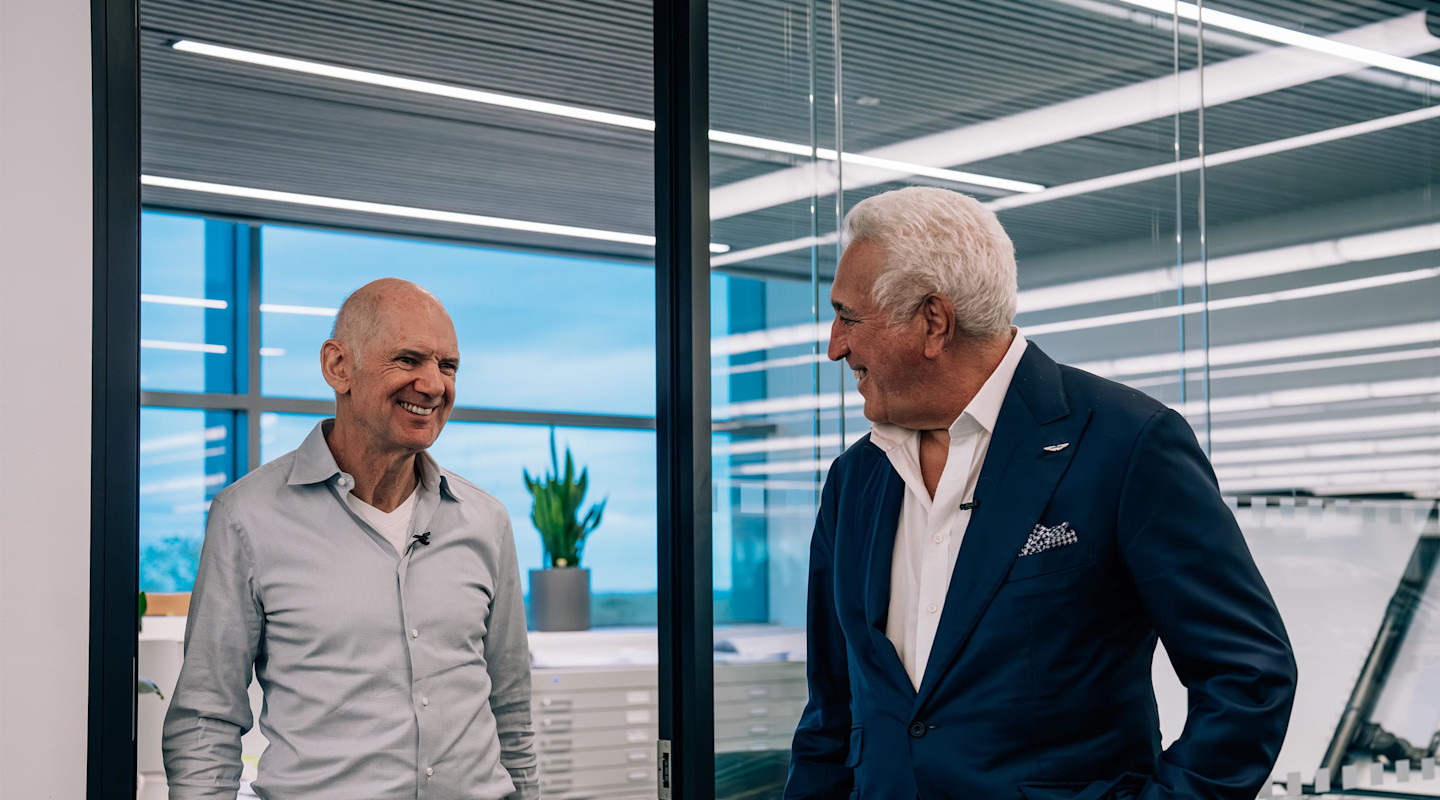
"The way we interpret it is that, when it comes to key strategic decisions, the buck stops with me. That's the heart of the job. Of course, [Executive Chairman] Lawrence is also deeply involved in those big calls too."
And yet, on TV, it's often Chief Trackside Officer Mike Krack we see doing the interviews, fronting the team. How does that division of responsibility work?
"At the track, in terms of representing the team publicly and dealing with the media, that's very much Mike's role. He's extremely good at it.
"That structure allows me to focus my time where I can add the most value – working with the team in Silverstone on the engineering, long‑term strategy and overall direction – while Mike leads the weekend‑to‑weekend track responsibilities."
Artificial intelligence
Last time we spoke, we only briefly touched on AI, but everyone's talking about it. Can you lift the lid a bit on the role our AI partners are playing in how we work and develop the car?
"We're fortunate to have great AI partners who are helping us significantly. Their contribution splits into two broad areas: business systems and engineering.
"On the business side, I'll be honest, it's not my area of expertise. I know they're making a big difference to how our systems run, but I'm not the best person to explain the details.
"On the engineering side, though, it's both tremendously useful and very important, particularly in simulation. They work closely with our engineers to push the limits of what's possible."
The really interesting challenge is trying to give AI something approaching 'intuition'. Humans are very good at that – seeing patterns, making leaps – but that's the hardest thing to define and encode. That's the frontier we're working on.
People hear 'AI' and they think of chatbots. How close is what you're doing to that?
"It's quite different. Most people think of AI as pattern recognition combined with an internet search. What we're doing is using AI and machine learning in very specialised roles that don't rely on the internet at all.
"We're feeding in our own data – wind tunnel, CFD, track – and using AI to spot patterns, correlations and trends that a human might not see quickly enough. It helps us make better decisions about how to develop the car.
"Its core advantage is processing power. It can do in minutes what a human couldn't do in the available time. The really interesting challenge is trying to give it something approaching 'intuition'. Humans are very good at that – seeing patterns, making leaps – but that's the hardest thing to define and encode. That's the frontier we're working on."
2027
You mentioned 2027 earlier. Has work already started on that project?
"Yes, we're in the early research stages. Right now, it's about the big architectural decisions: where we position the engine in the wheelbase, how we position the chassis, and the fundamental choices that affect very long lead‑time items.
"We're looking at front and rear suspension concepts, gearbox shape – all the things that heavily influence the aerodynamics.
"A key aim is to release the '27 car to production much earlier in the process, so we're not putting everyone under the same pressure we've had this year. That should allow us to optimise weight, stiffness and detail far more effectively."
There are regulation tweaks coming too. What's your take on the formula?
"The most obvious changes are on the power unit side: five per cent extra fuel, some adjustments to energy storage and deployment, and some finer tweaks.
"On the chassis side, the changes are fewer but still significant. The biggest is to what's often called the 'bib' or 'tea tray' at the front of the floor. The leading edge has been moved by about 300 millimetres, which allows you to run the front of the car lower. That brings a different set of aerodynamic characteristics.
"There's also a slightly shallower rear wing to reduce downforce, some changes to the front of the floor – the 'bear claws' or 'fingers' reducing from five to three – and the removal of various tricks teams have been using around the exhaust and rear wing.
"The key one for us is that front‑of‑floor change. It gives everyone a different aero challenge to solve. Because we've effectively been forced to grow up quickly as a team over the last 12 months, we're in a much better place to capitalise on the regulation changes than we would have been a year ago.
"We're a much more mature organisation now, and that leaves me very optimistic about what's to come."
Related content
UNDERCUT | Lance Stroll: "You've got to believe through the difficult periods"
Read more
The road less travelled with Jessica Hawkins
Read more
UNDERCUT | Adrian Newey wants you to keep an open mind
Read more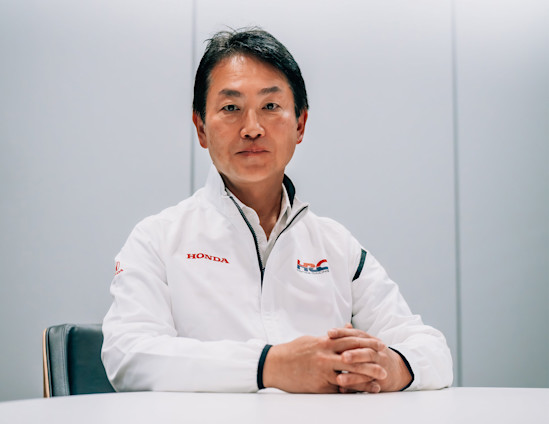
UNDERCUT | Koji Watanabe on Honda's next F1 chapter, reuniting with Adrian Newey, and late-night calls in Sakura
UNDERCUT | Enrico Cardile: "Failure is not an option"
Read more
Fernando Alonso on why Aston Martin Aramco has all the pieces it needs to win in F1's new era
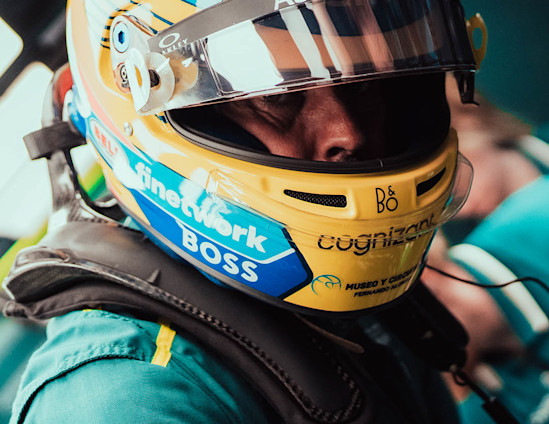
Fernando Alonso: "I want to be better" – An Original racing driver in eight parts
Read more
UNDERCUT | Lance Stroll: "It's not easy to win in F1, but I'll give it everything"
Read moreMake yourself at home
Two days. One house. For every fan. Feel at home at I / AM House, London.