
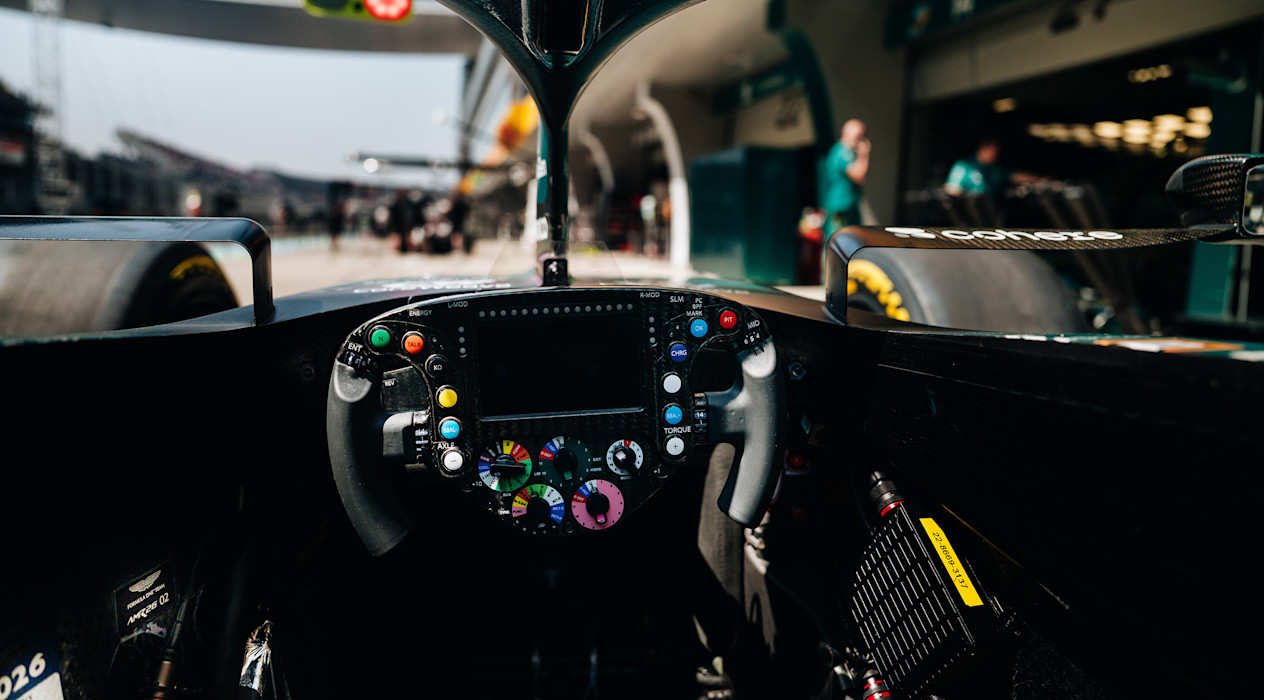
The 2026 regulations have changed how drivers find performance. Pedro de la Rosa explains the key systems shaping life behind the wheel and how F1's new era presents a very different challenge for drivers.
Several races into the 2026 season, Formula One's sweeping new regulations have moved from theory to reality. The unknowns have become patterns. The surprises have become lessons. And for drivers, the challenge has evolved from understanding the new era to mastering it.
Energy deployment has become a more visible strategic tool. Braking characteristics have changed. New systems require new habits. While the fundamentals of speed remain the same, the way drivers access that speed has shifted.
The opening phase of the season has been a period of discovery not only for teams, but for those in the cockpit. Along the way, the regulations themselves have continued to evolve, with refinements and clarifications helping shape Formula One's latest technical chapter.
As we prepare to step into the Red Bull Ring, one of Formula One's most exacting tests with its heavy braking zones, rapid changes of direction and long straights, the timing feels apt to understand how drivers are adapting to this new era.
We turned to Team Representative Pedro de la Rosa – a driver who has lived through multiple technical eras of Formula One – to unpack some of the key tools shaping performance in 2026 and what the sport's new regulations have changed for those behind the wheel.
Energy management
"One of the most talked about aspects of the season so far has been the variety of approaches teams have taken to energy deployment and recovery.
"In the early races, different cars appeared to be using their available energy in noticeably different ways, but that variation is starting to reduce.
"Everyone is learning the most efficient way to use their energy and, as a result, starting to follow similar strategies.
"This is the way Formula One usually works. You learn a new set of regulations, each team comes up with their interpretation, and then everyone converges towards what turns out to be the best approach. We'll start seeing everyone with the similar energy maps in the coming Grands Prix."
The higher the revs, the more the battery charges – but in drivability terms, it's not ideal to downshift all the way to first gear.
Recharge
"There's a preference now to use the shortest gear ratio possible in the corners to get as much recharge as you can.
"The higher the revs, the more the battery charges – but in drivability terms, it's not ideal to downshift all the way to first gear for a hairpin because there's a massive kick on the rear axle. This is something Lance and Fernando in particular are having to contend with.
"It's good for the battery, but it makes the rear end of the car very difficult to control.
"Keeping the entry smooth is critical because a smooth entry allows you to go to that very short gear.
"If the entry isn't smooth and the rear isn't stable, then you end up in a higher gear and charging less.
"The other factor which, combined with power unit behaviour and downshifts, has an impact on rear-end stability is the reduced aero performance of these new cars compared to their predecessors. They have smaller wings and therefore generate less downforce."
Overtake Mode and Boost Mode
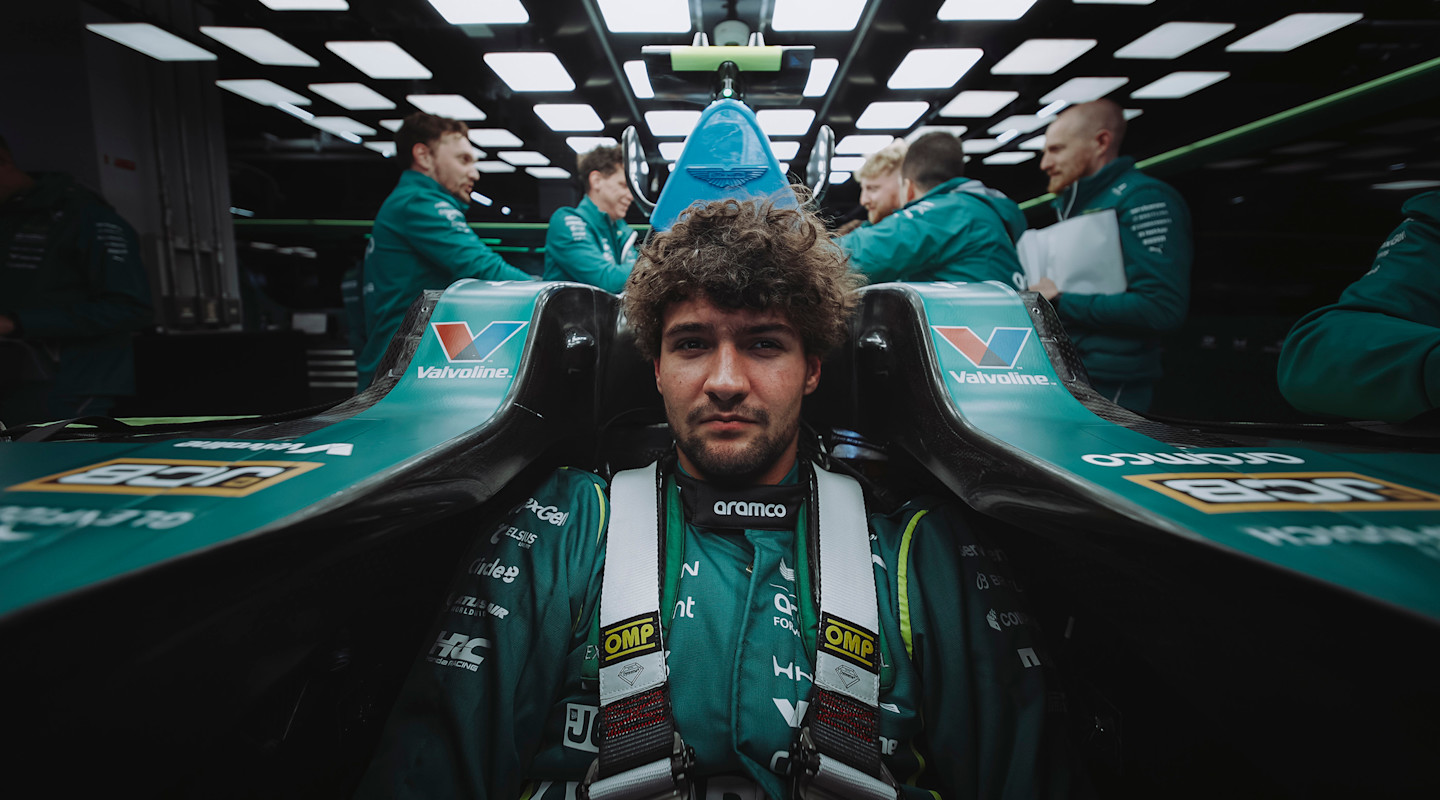
"If a driver gets to within one second of the car they're chasing at a designated point on the track, they can deploy extra energy to aid an overtake.
"Drivers are able to play with their overtake energy, and it's interesting to see how that's working out.
"That extra 0.5mJ in your pocket, available to use anywhere around the lap, means you really have to wait for the right moment to use it.
"0.5mJ might not sound like a lot, but it's a huge amount of extra energy. If you have it and the driver in front does not, then it means you can have a very different energy profile for that lap and really go on the attack.
"This differs from Boost Mode, which is an energy deployment tool from the Energy Recovery System (ERS) that delivers maximum power from the engine and battery at the push of a button. It is available to all drivers anywhere on track."
From the cockpit, the objective is to make the most of the car's performance in every phase of the lap.
Active Aero
"In addition to energy deployment, one of the most visible innovations introduced by the current regulations is Active Aero.
"Drivers can switch into Straight Mode at designated points around the circuit, changing the configuration of the front and rear wing elements to reduce drag and increase top speed.
"The idea is quite simple. When you need grip – in the braking zones and through the corners – the car is in Corner Mode with the front and rear wing flaps closed, which gives you the aerodynamic load you need to attack the corner and keep the car stable.
"But when you reach the designated high-speed sections, the car can switch to Straight Mode. The front and rear wing elements open to allow air through, reducing drag and allowing the car to carry more speed on the straights.
"From the cockpit, the objective is to make the most of the car's performance in every phase of the lap. Through the corners you're looking for stability and confidence. On the straights you're looking for efficiency and top speed. Active Aero helps deliver both."
Differential and brake balance
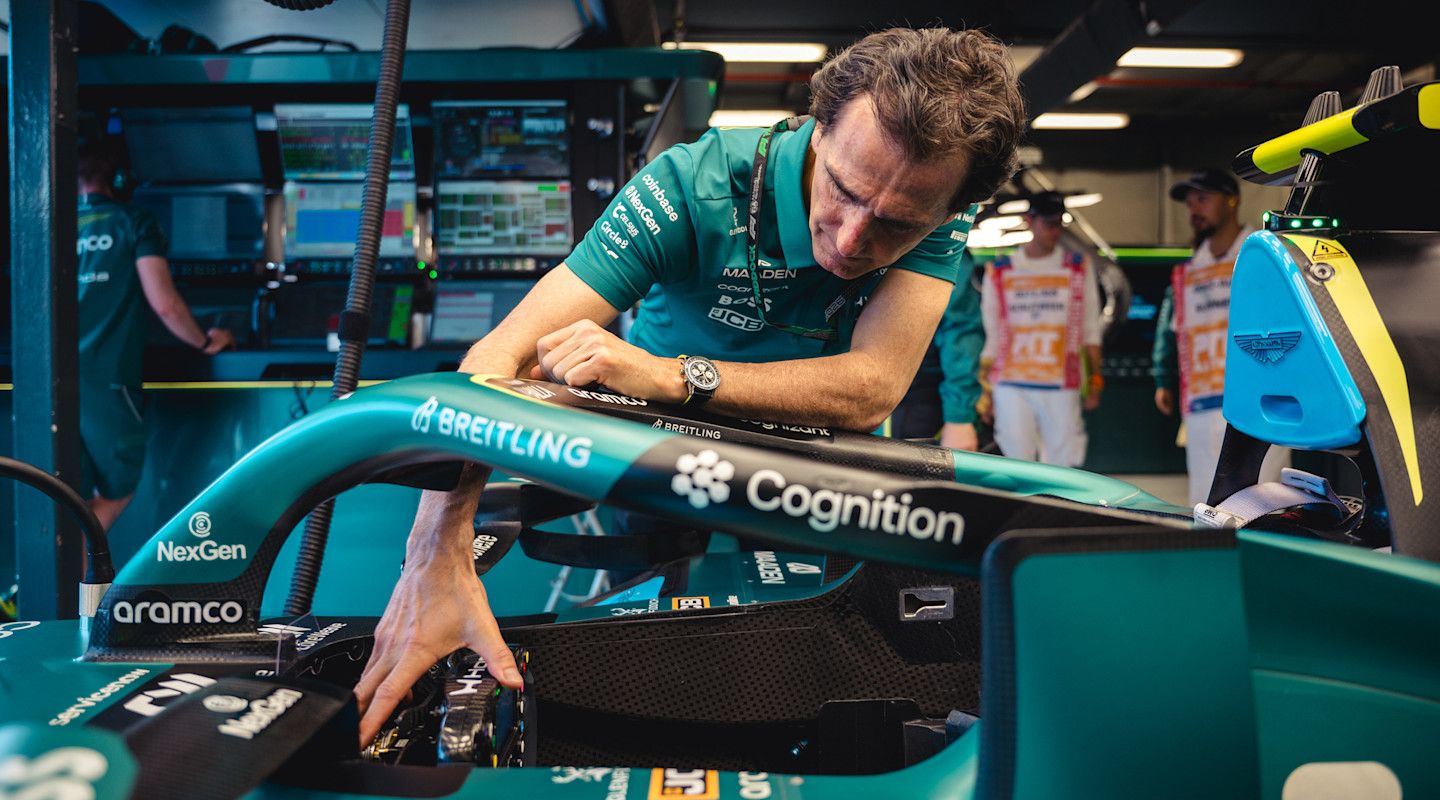
"Although the regulations have changed, many of the core adjustments Lance and Fernando make from the cockpit remain familiar.
"For the way the drivers use the controls on the steering wheel, the basics of adjusting differential and brake balance remain the same.
"For an understeering car, you open the diff. For an oversteering car, you close it.
"Brake balance remains one of the most frequently adjusted settings on the steering wheel, but it has become even more important in 2026 because of the characteristics of the new power units.
"Drivers adjust brake balance a lot – brake balance being linked to engine braking. More engine braking means you effectively move the brake balance rearwards; reduced engine braking moves it forwards, so it's something you're changing corner to corner rather than lap to lap.
"With straight-line braking, you have more load on the front wheels, but there are also corners where you brake into the apex and have to be careful of locking the front. Often you have the inside wheel in the air and have to bring the balance rearwards.
"You're constantly making these adjustments on the wheel. This is no different to the previous generation of car, but what adds to the challenge this year is that the torque through the rear wheels is huge and this impacts brake balance quite a lot.
"The cars are rear-wheel-drive, which means engine braking helps slow the car down through the real wheels as well as the brakes. Because the rear wheels are getting braking force from two sources, the car's brake balance shifts toward the rear, and this is more pronounced this year because of the increased torque.
"It's a big challenge for the drivers to be very precise on the brakes and recover as much energy as possible.
"If the rear is not stable, you cannot brake as hard, and if you cannot brake as hard, you can't regenerate as much."
Simulation tools play a crucial role in helping teams understand where energy can be harvested, where it should be deployed and how a race weekend is likely to unfold.
In the sim
"Much of the work required to unlock performance happens before a Grand Prix weekend even begins.
"Simulation tools play a crucial role in helping teams understand where energy can be harvested, where it should be deployed and how a race weekend is likely to unfold.
"It's very important to go to the track with that baseline energy map: knowing where you will recover the most energy, where to lift and coast, and where to superclip (where the MGU-K siphons off power that would usually drive the rear wheels and stores it as electrical energy.)
"It's not just the driver-in-the-loop simulator that Lance, Fernando and Jak use at the AMR Technology Campus, but all of the offline simulation tools as well.
"Running in Free Practice is so limited, it would be very difficult to do all of that work at the track – and impossible on a Sprint weekend.
"You have to do your homework this year."
Related content
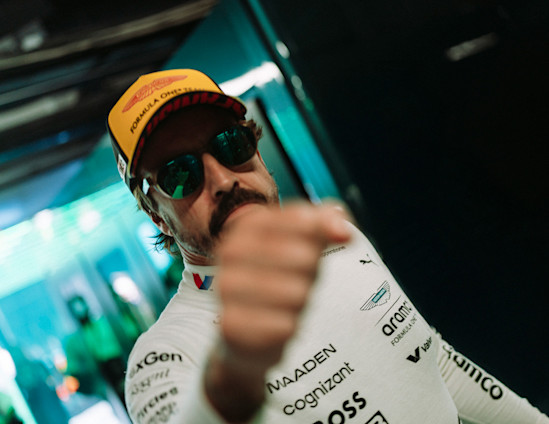
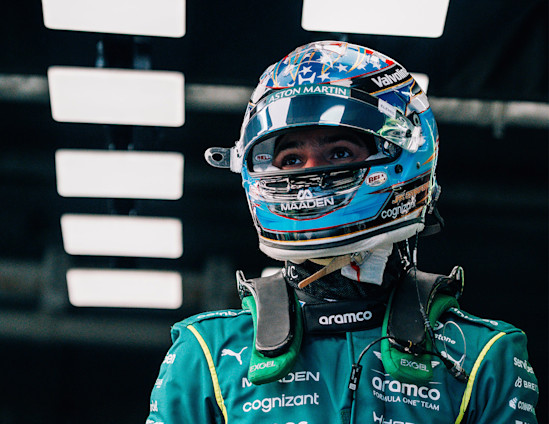
Jak Crawford to drive in FP1 at Austrian Grand Prix
Read more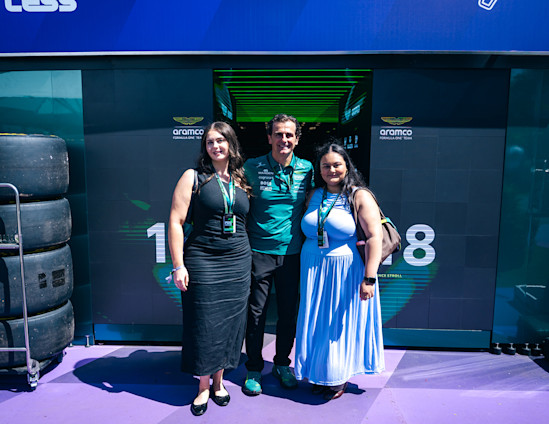
Pitlane to paddock: Going trackside at the Australian Grand Prix with I / AM
Read more
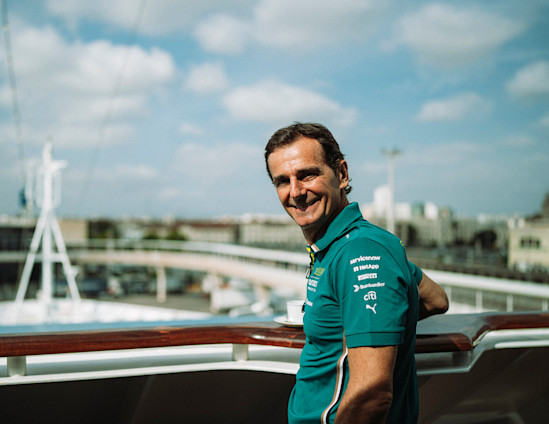
The Steering Column | Setting sail with Pedro de la Rosa and keeping up family traditions in Mallorca
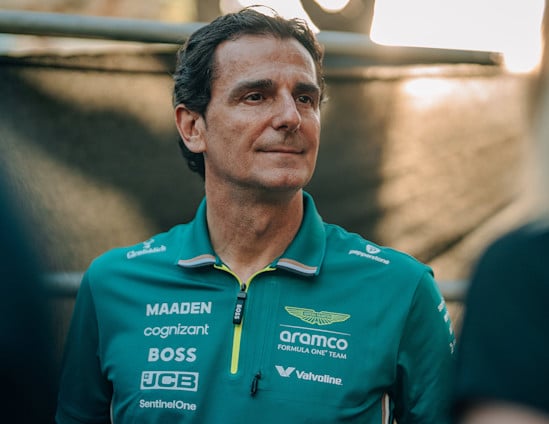
Talking Points: Pedro de la Rosa on threading the needle in Austria, AMR25 updates and the team's new Driver Academy
Read more
Atlas Air Worldwide takes to the skies with Pedro de la Rosa
Read more
From the track to the court: Pedro de la Rosa and Thanasi Kokkinakis take on pickleball
Read moreRing of steel
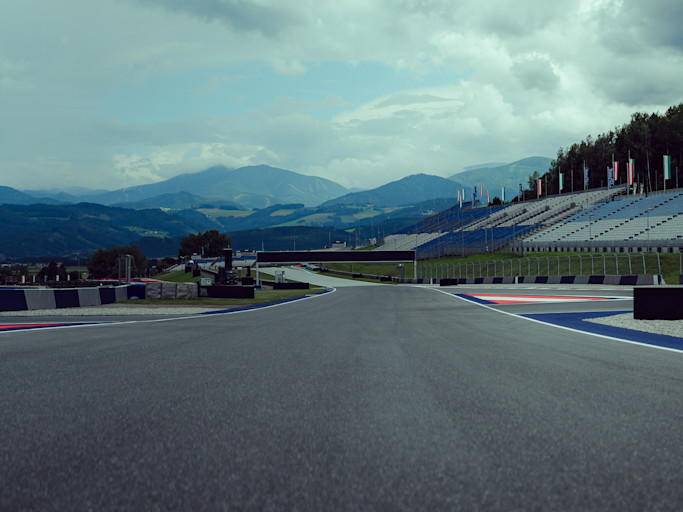
Great things come in small packages. Here's your guide to the Austrian Grand Prix weekend.
Amplify your fan experience
From exclusive collabs to once-in-a-lifetime prizes, I / AM DROPS is a series of unique and ultra-limited moments and fan experiences.
Sign up for I / AM or sign in to unlock.